
#29 November 10
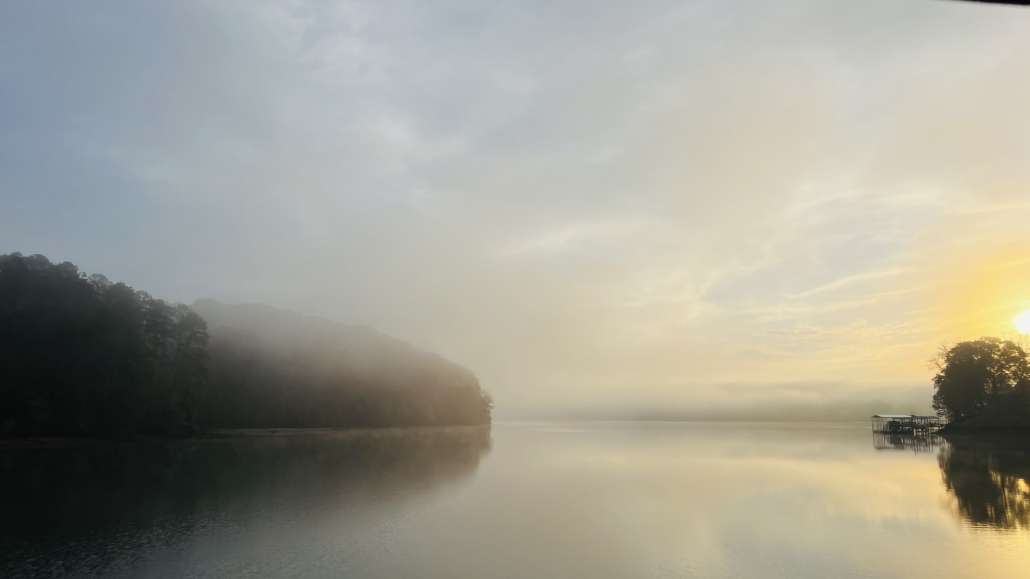
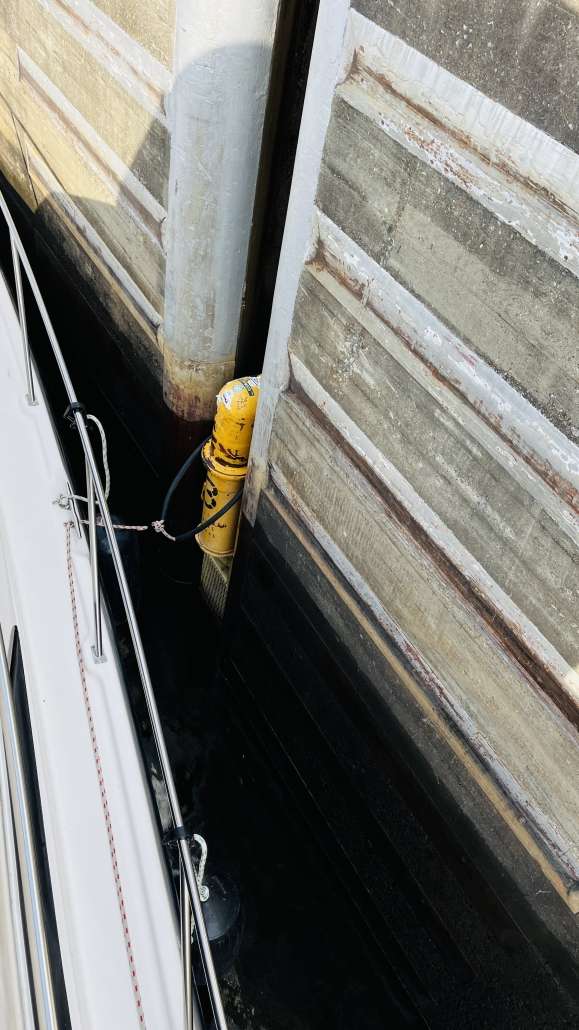
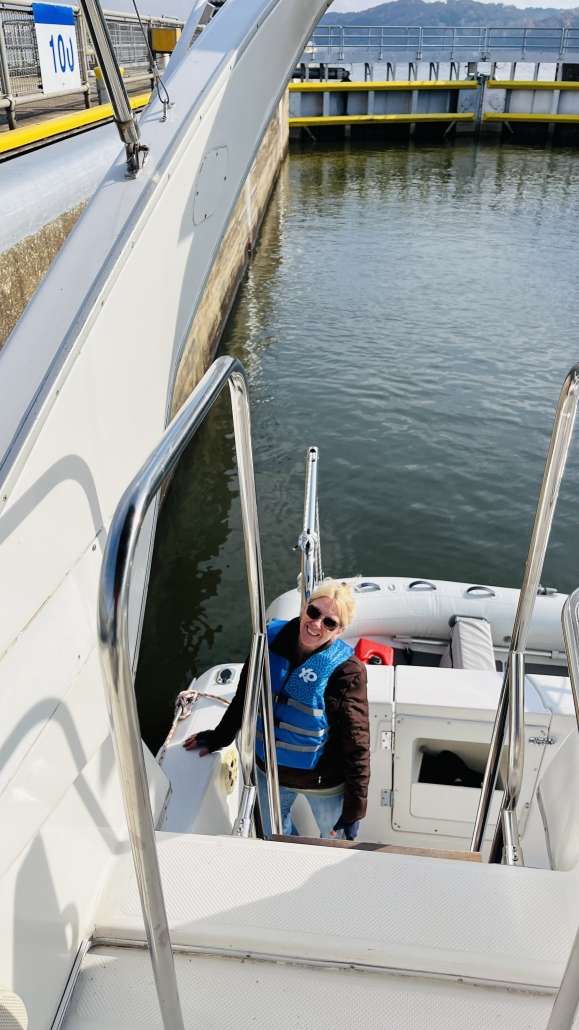
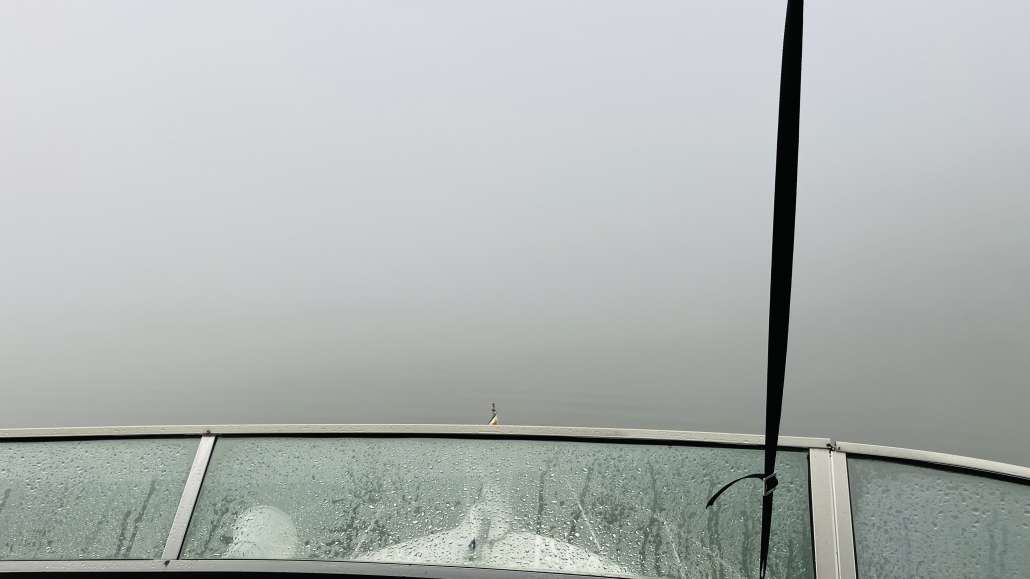
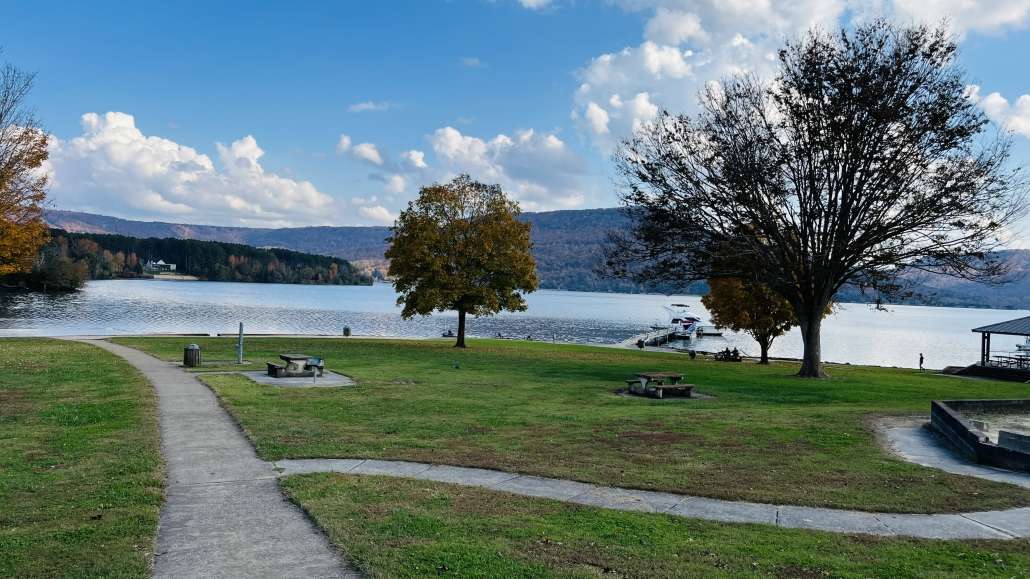
We are sitting at Ditto Landing marina just south of Huntsville AL, waiting out a cold front and taking a day off. All is well, however the transition from land life to boat life is a significant one. It really is kind of like living on another planet. The excitement and the sheer number of new experiences kind of wore us out, so a day off feels good. We also are dealing with not one but two time changes, first was daylight savings time kicking in right before we left, then we crossed the Central time zone and promptly lost another hour. So when we woke up at six this morning it was really eight by our biorhythms! It does help us get off to an early start, but 9 pm is really 11 pm so by the end of the day we are done. No complaints though, it’s all good, just a bit of an adjustment to get used to. This blog will probably be a little different from here on out, we won’t have time to write as much (How did we manage to write 28 posts before we have even left?) but we will post pictures and some details when we get a chance. Starlink is working like a champ, full internet access all the time which is nice. Radar works too, thank goodness, we got caught out in some fog one morning and it was zero visibility. We just went channel marker to channel marker along the edge of the river (dead slow) till it cleared.
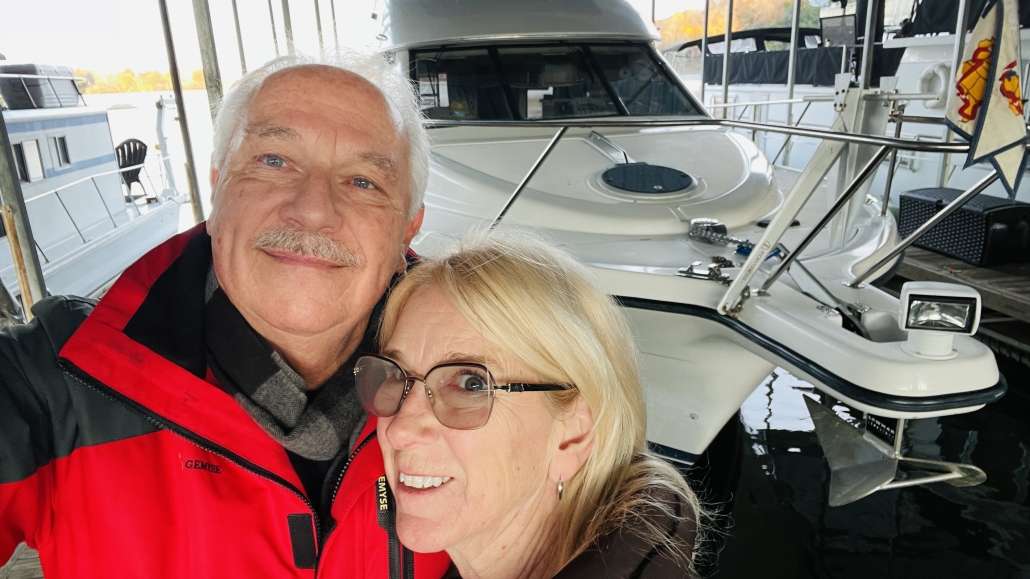
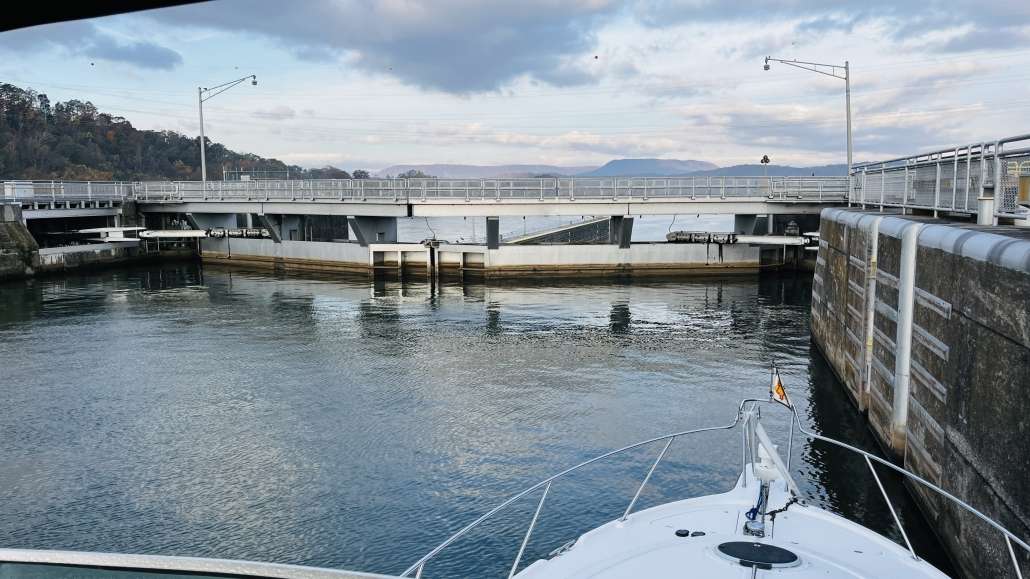
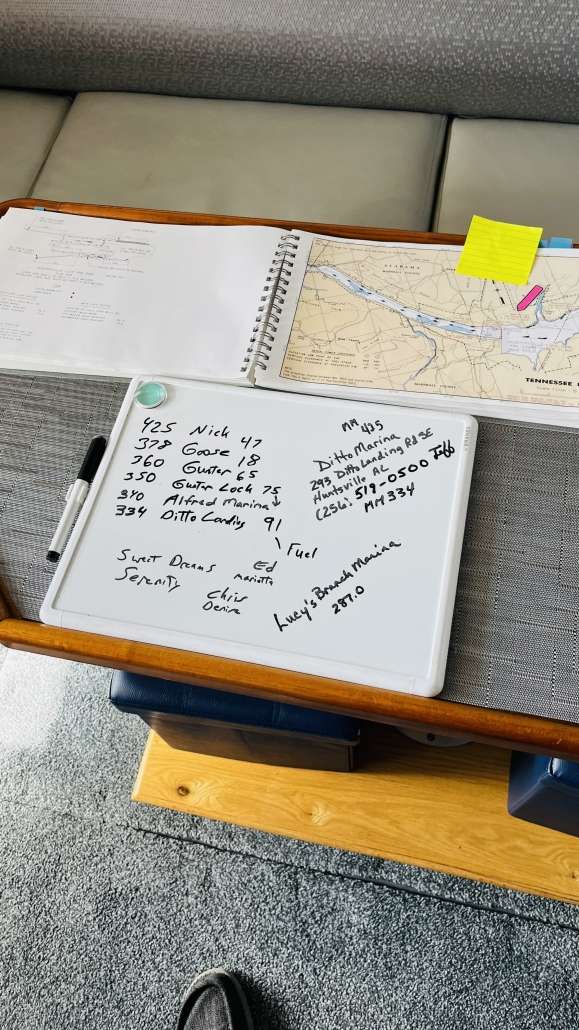
We’ve already met several super nice people, one night while delayed at a lock we stayed at a free dock at a park and met three other boats also headed south, Serenity, Sweet Dreams, and Next Lap. Cheryl has an entire system for keeping track of all the people and boats we’re anticipating meeting.
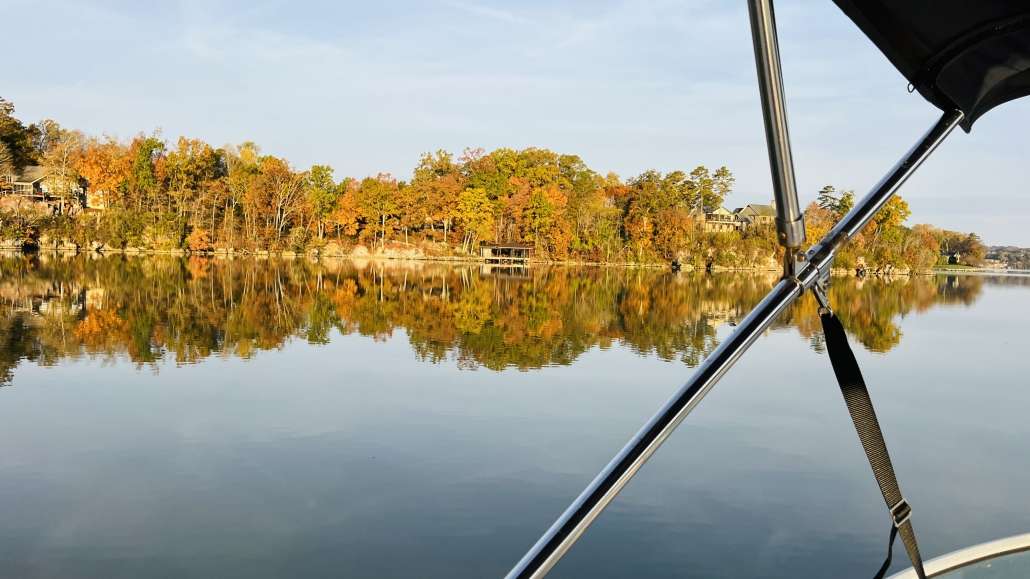
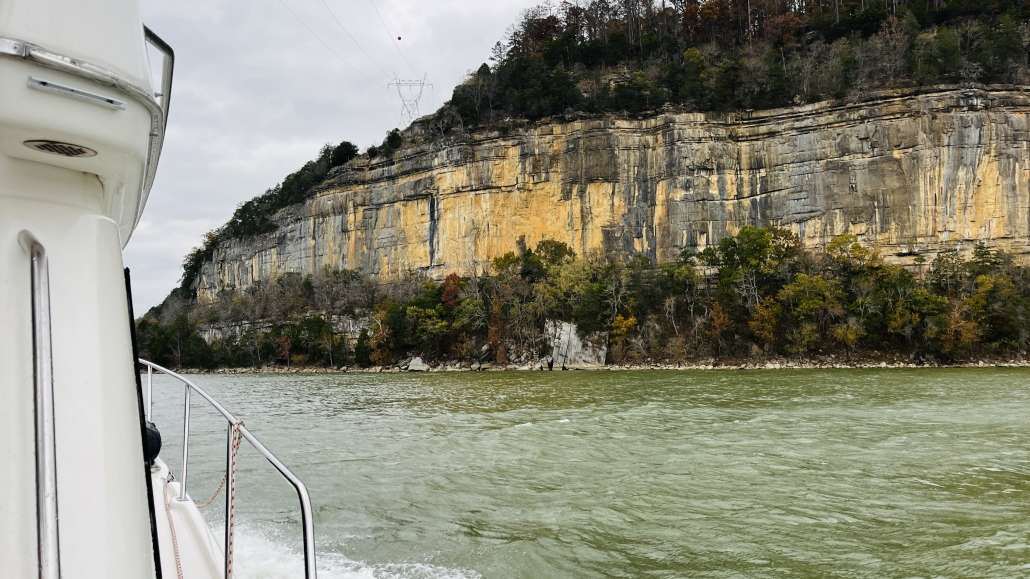
As far as the trip goes, it is really a unique experience. Gliding downstream on the Tennessee river is to slip past the veils of history. Most Americans see our national river system only fleetingly as a glimpse of water from the window of a car as they rocket overhead on an interstate or state highway bridge. Traveling downriver or “downbound” as the tugs call it, you see every inch. We have glided by rock outcroppings and the cliffs Tennessee is known for, places like Nickajack Cave near Chattanooga where during the Civil War men died fighting over bat guano. Bat guano is rich with potassium, one of the main ingredients in gunpowder, and so essential to both sides of the conflict. And yet here we are, peacefully passing by bluffs that are now populated by hawks and rabbits and maybe a few deer. Oh, and as you get close to a city, oversized McMansions that drop long staircases down to the water like the roots of a tree spreading over bare rock. The river itself, draining millions and millions of square miles of watershed, once carried thousands of flatboats, homemade rafts with small cabins and an enclosure for livestock, some up to 80 feet long, that carried millions of migrants in the early 1800’s. More than three million brave souls traveled by flatboat down the Ohio and Mississippi between 1800 and 1850 or so, while only about 500,000 traveled by Conestoga wagon over the Oregon and California trails. The inland rivers – not the famous trails, one of which ran through my home town (Dodge City Kansas) – were American’s first western frontier. Near Knoxville is the Tennessee town of Newport, which used to be New Port because it was once one of the larger ports on the inland river system. For many years commerce was practiced by people living in New Port who would build a flatboat (cost of materials about $75), load it with grain, livestock, iron tools, beaver pelts bound for France, maybe some moonshine, and push off into the Tennessee river. They would fight snags, wind and weather and moving sand bars all the way to the Mississippi, then more of the same all the way to New Orleans, then the third-largest city in America. There, once the cargo was sold and the flatboat taken apart and sold for lumber, they would walk or ride mules back to New Port. Then do it again. At times there were some 8000 flatboats plying the Ohio, Tennessee and Mississippi rivers each year. Small towns such as Cincinnati became boomtowns as they supplied the needs of the rivermen. Today, as we glide along the muddy water, all is quiet, with no trace left of the massive movement of people and cargo who definitively shaped this country and who once traveled these same waters.
More later, I’ve got stuff to do before we move out early tomorrow morning!


Love to hear your take on travel thus far
Hopefully it will be warm enough after today
Interesting history. You are correct. The rivers were very busy in earlier times.